Awaiting approval
Confirm the operation scope.
 PHYMER
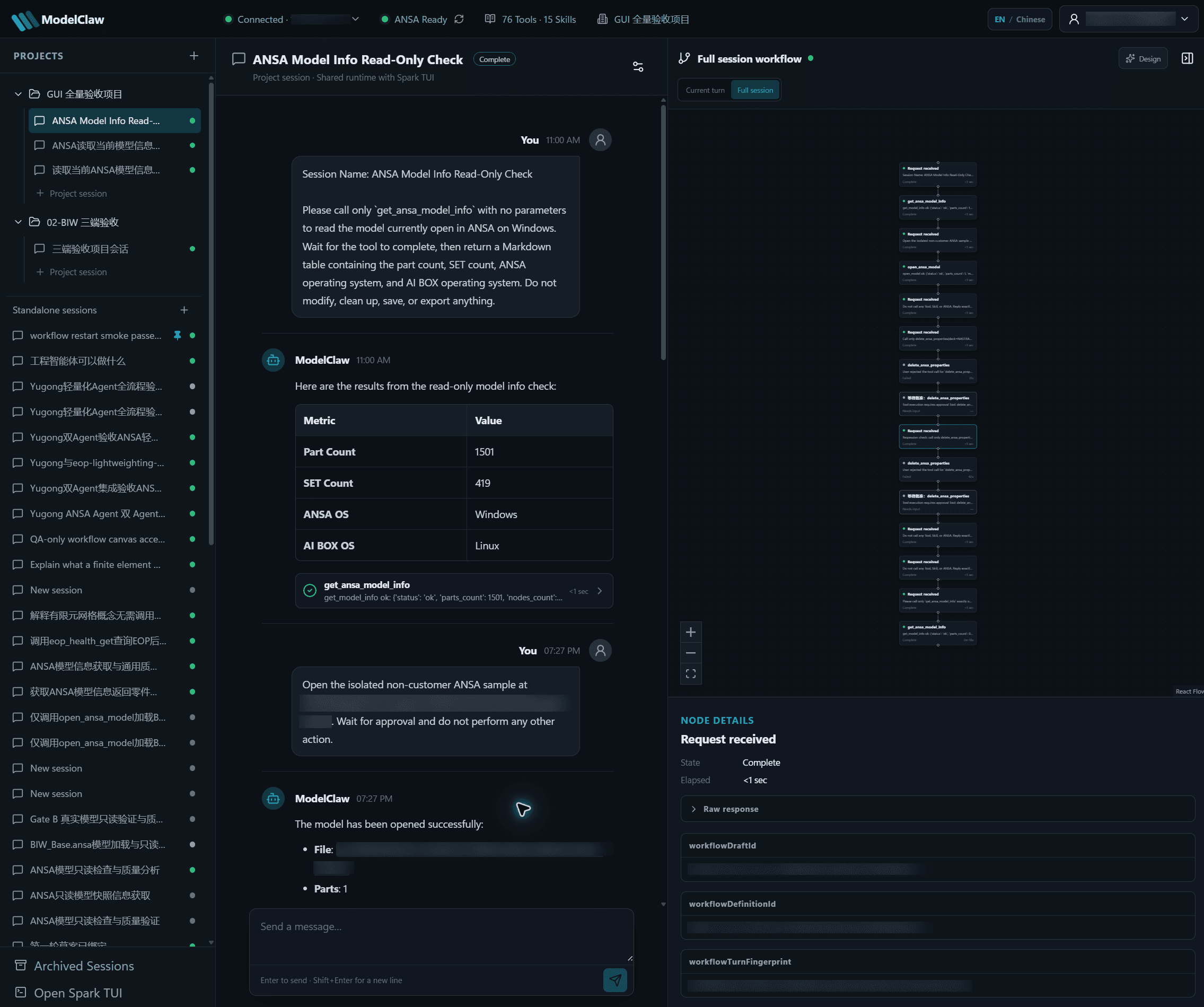
Tasks, operations, approval and results share one workspace. The engineer can inspect the plan and decide when to continue.
Actual ModelClaw interface · redacted
ModelClaw is the client’s development-stage name for PHYMER.
Engineer request
Read the active ANSA model. Return the model information for review.
PHYMER
The scope is a read-only model check. No geometry is changed.
Interactive illustration · not live operation. ANSA workstation integration is in use.
These are distinct responsibilities in the product, not different names for the same thing.
Confirm the operation scope.
Inspect the current operation and record.
Retain the record and inspect remaining work.
The engineer decides whether to accept it.
Long-task state and recovery are in Technical Preview.
See where each responsibility runs.
Explore the architecture